Almost every Nigerian estate runs on a WhatsApp group. It's free, everyone already has it, and it's how neighbours find a plumber, warn about a fallen pole or share condolences. Nobody should take that away. But somewhere between 40 and 400 households, the group starts doing jobs it was never built for, and the committee pays for it in late evenings and AGM arguments.
What WhatsApp does well
- Quick conversation between neighbours.
- Urgent alerts that need eyes in the next five minutes.
- Building a sense of community: greetings, celebrations, recommendations.
Where the group chat breaks down
- Service charge: payment screenshots get posted in the group, the treasurer copies them into a spreadsheet by hand, and nobody can say for sure who has paid.
- Notices: the AGM date is buried under 300 messages by the next morning. New residents never see anything sent before they joined.
- Privacy: every member can see every other member's phone number, including tenants who moved out a year ago and are still in the group.
- Records: when the admin changes phones or steps down, years of history go with them.
- The gate: guards call residents to confirm visitors one by one, and the logbook can't be searched when something goes wrong.
- Tone: reminders sent to everyone annoy the people who already paid, and naming late payers in public starts fights.
Side by side
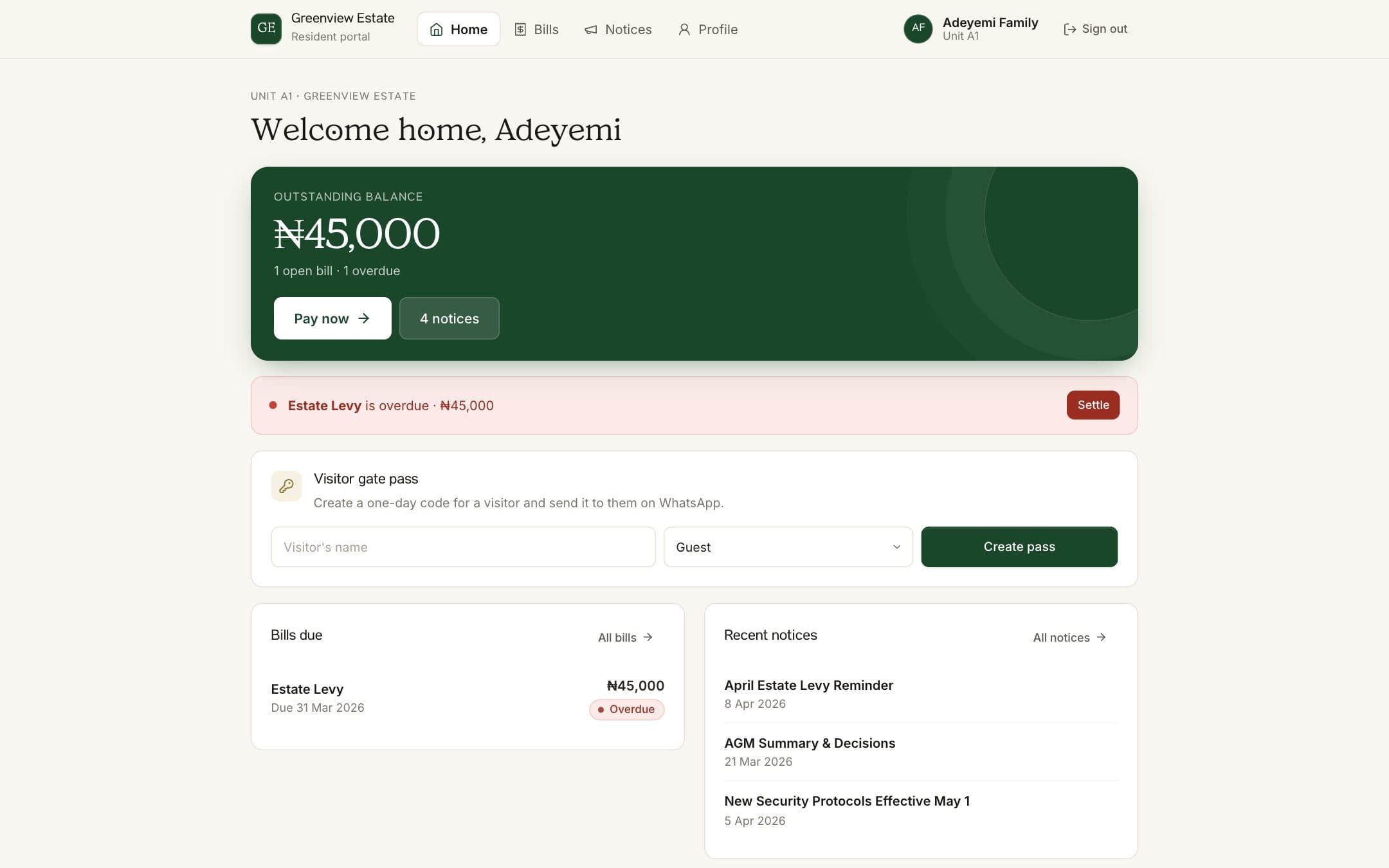
- Who has paid: in WhatsApp, someone reconciles screenshots by hand. In estate software, every household has a balance that updates when a payment arrives.
- Receipts: in WhatsApp, you wait for the treasurer. In estate software, the receipt is ready as soon as the payment is recorded.
- Reminders: in WhatsApp, a broadcast to everyone. In estate software, a personal message to the households that actually owe.
- Notices: in WhatsApp, scrolled away in a day. In estate software, kept on record and sent to the whole estate or just the blocks affected.
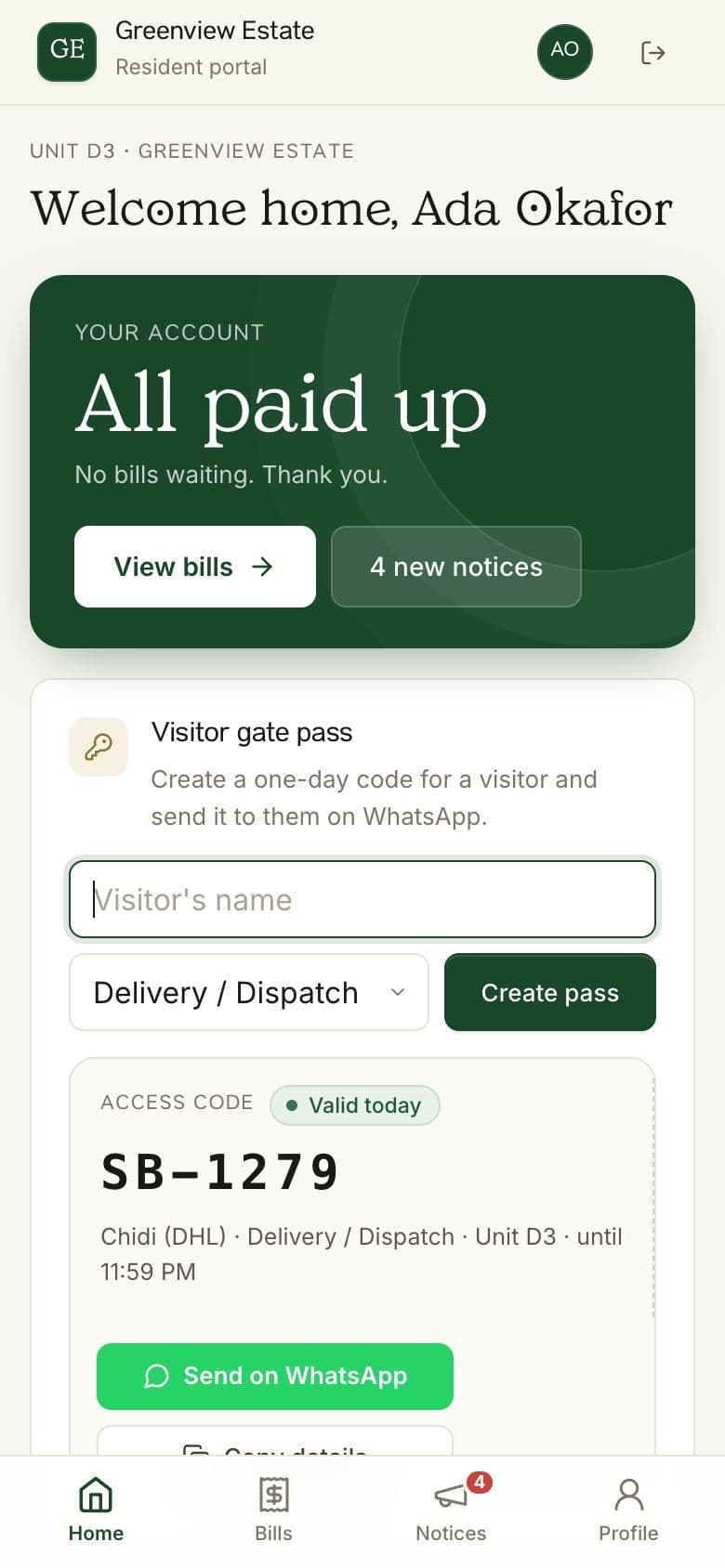
- Visitors: in WhatsApp, a phone call to the resident. In estate software, a code the guard checks, with a timestamped log.
- Spending: in WhatsApp, explained at the AGM from memory. In estate software, every payout is recorded with who approved it.
- Cost: WhatsApp is free. Software costs money, but so do the treasurer's evenings and the dues that never get collected.
You don't have to choose
The estates that run smoothest use both. Keep the group for conversation. Move the things that need a record into software: money, official notices, the resident directory and the gate. Then the group gets friendlier, because nobody is arguing about receipts in it any more.
Signs you've outgrown the group
- Your treasurer spends more than a few hours a month matching bank alerts to names.
- Residents regularly ask "has my payment been received?"
- You've had a security incident and couldn't tell who was let in.
- The same questions about dates and amounts come up every week.
- Someone has asked to see the accounts and it took weeks to put them together.
How BreeUp helps
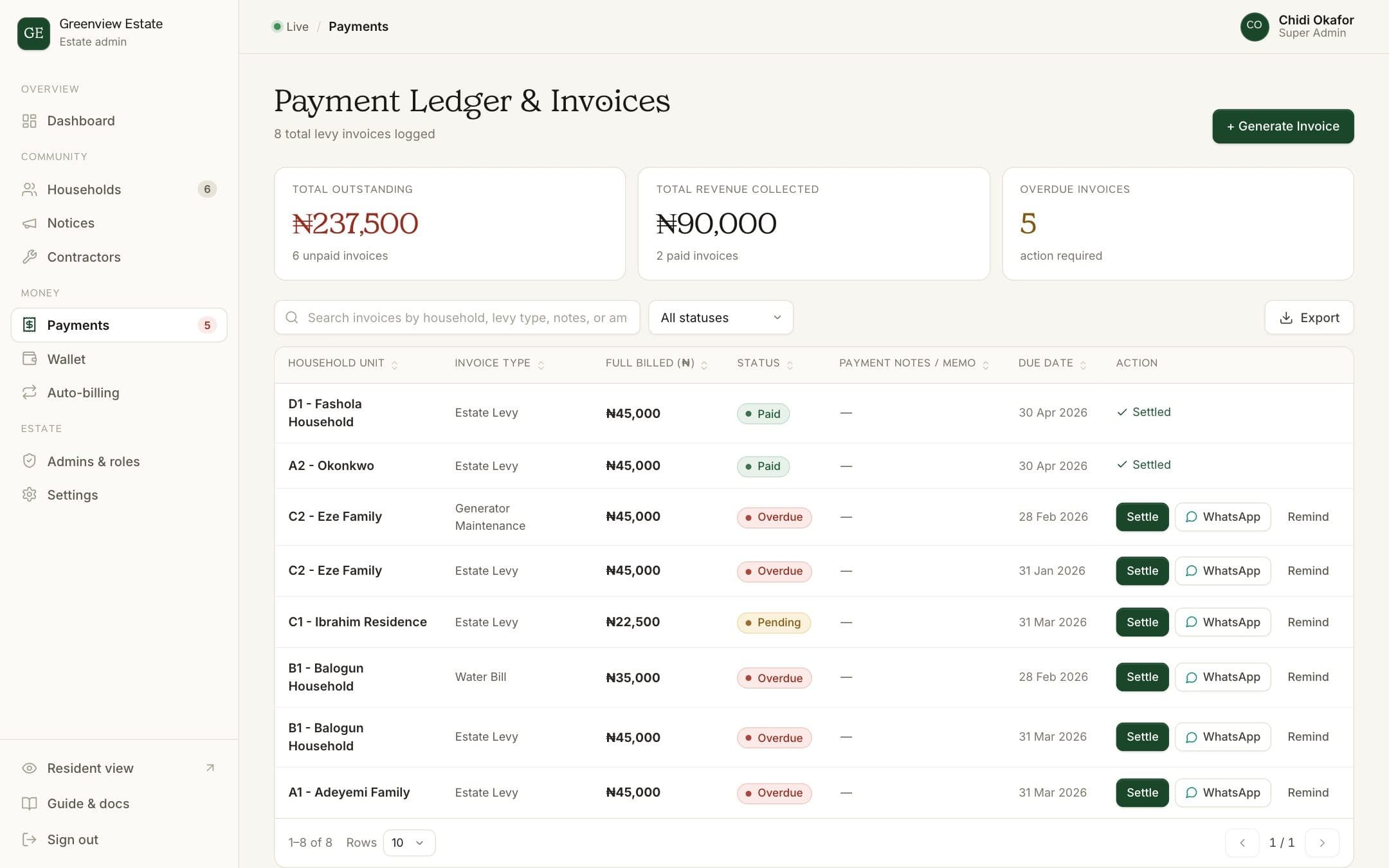
BreeUp doesn't replace the estate WhatsApp group. It takes the bills, receipts, who-owes list, notices and records out of the chat and keeps them in one place.
When someone owes, BreeUp writes a WhatsApp reminder for that household, so it goes to them and not the whole group. Automatic WhatsApp, SMS and email messages are available as add-ons.
Set up your estate, or read about community management.