Every estate has households that fall behind. A few are refusing on principle, but most are confused, stretched or waiting for someone to ask them properly. The way you handle the first group decides how much trouble you have with the second, so start with the quiet fixes before you reach for the heavy ones.
First, find out why
- They don't know what they owe. The amount, period or account details were only ever posted in a group chat.
- They think they've paid. A transfer went in without a reference and nobody matched it.
- Landlord or tenant? The tenancy agreement says one thing, the landlord says another, and the estate is chasing the wrong person.
- They disagree with how the money is spent. The real complaint is about the generator, the security firm or the accounts.
- They can't afford it right now. A lump sum for the year is a lot to find in one month.
- They simply won't. Usually a small number, and they watch how the estate treats everyone else.
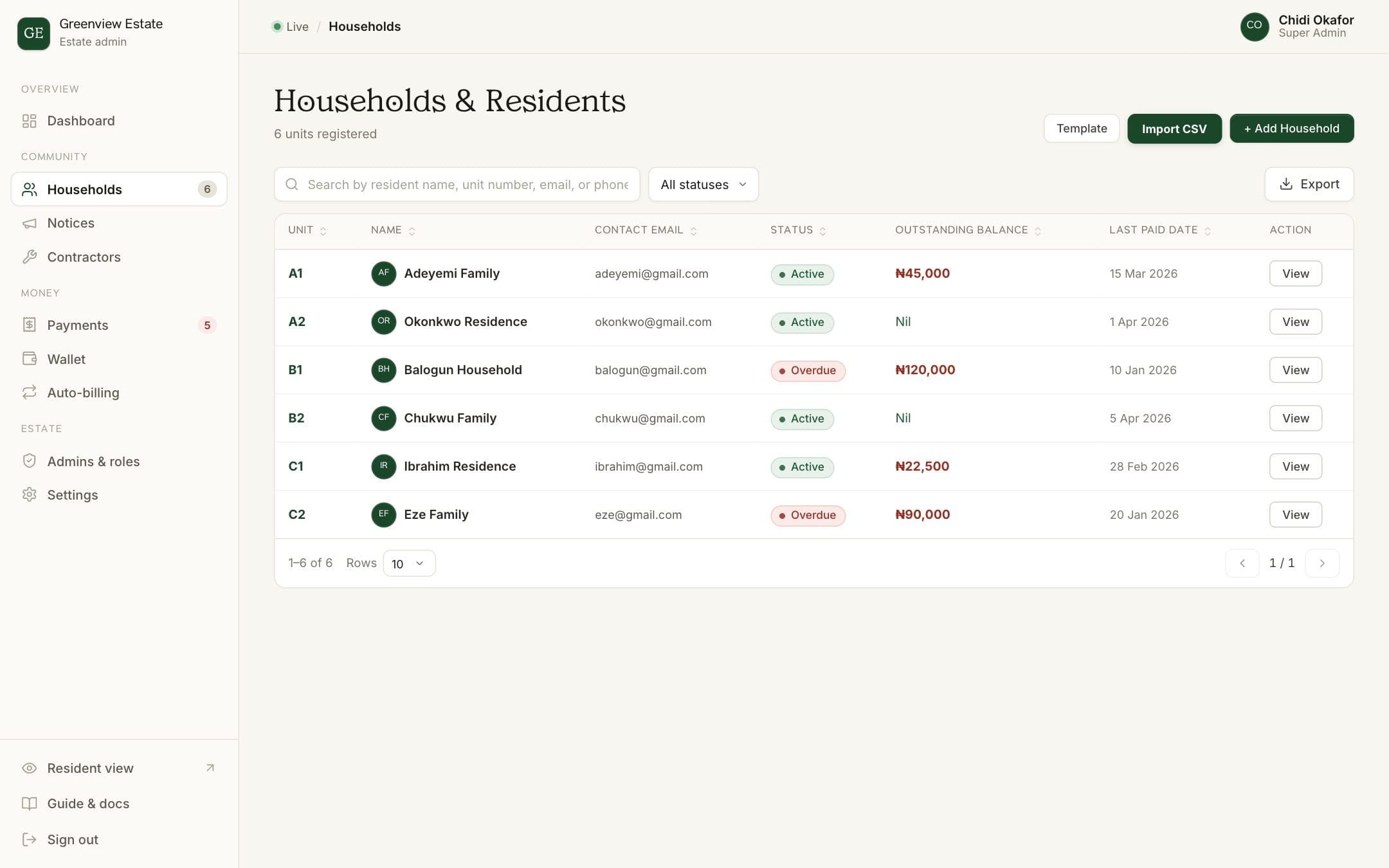
Fix the bill before you chase the payer
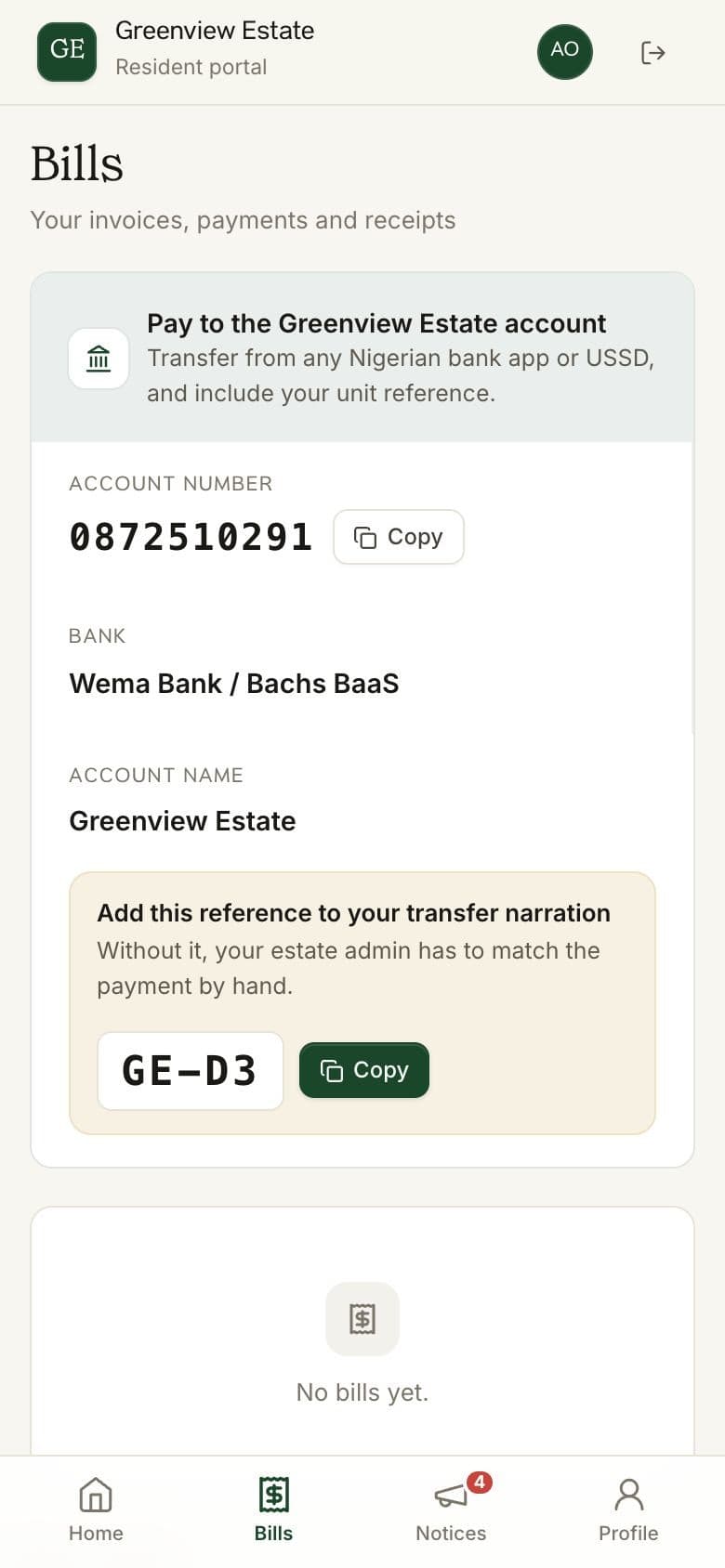
Make sure every household has received a clear bill: the amount, what it covers, the due date, the estate's account details and their own payment reference. Check your records for transfers that came in without a reference. A surprising share of "defaulters" turn out to have paid.
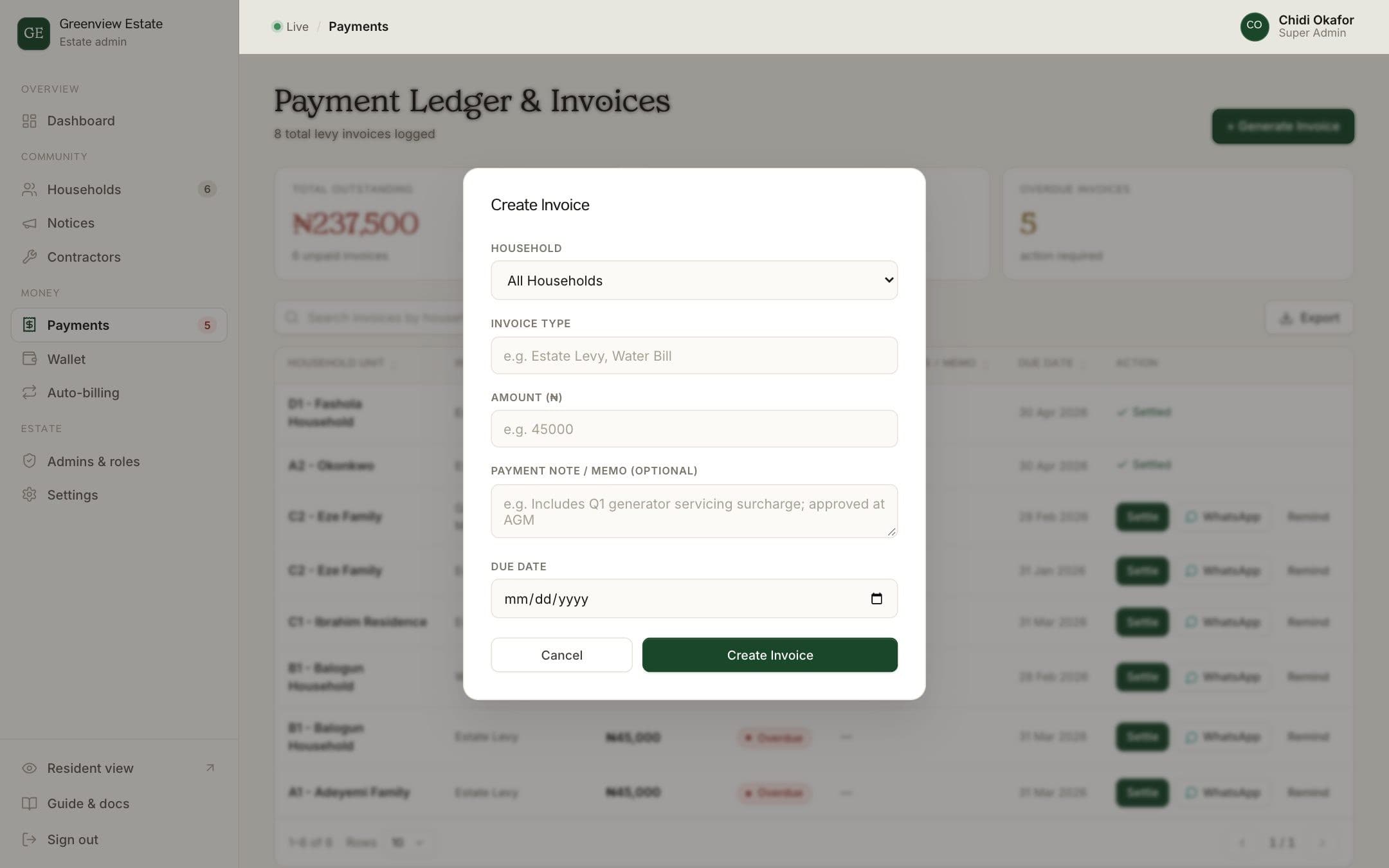
Remind in steps, privately
- A friendly reminder
A short personal message a few days after the due date, with the amount and how to pay. Most late payers settle at this point.
- A firmer reminder
Two weeks later, mention the amount outstanding and ask them to pay or get in touch to agree a plan.
- A conversation
A call or a visit from a committee member. You'll learn more in five minutes of talking than in five messages.
- A formal demand letter
A written notice, signed by two executives, stating the amount, the period, a final date and what the estate will do next. See our service charge demand letter template.
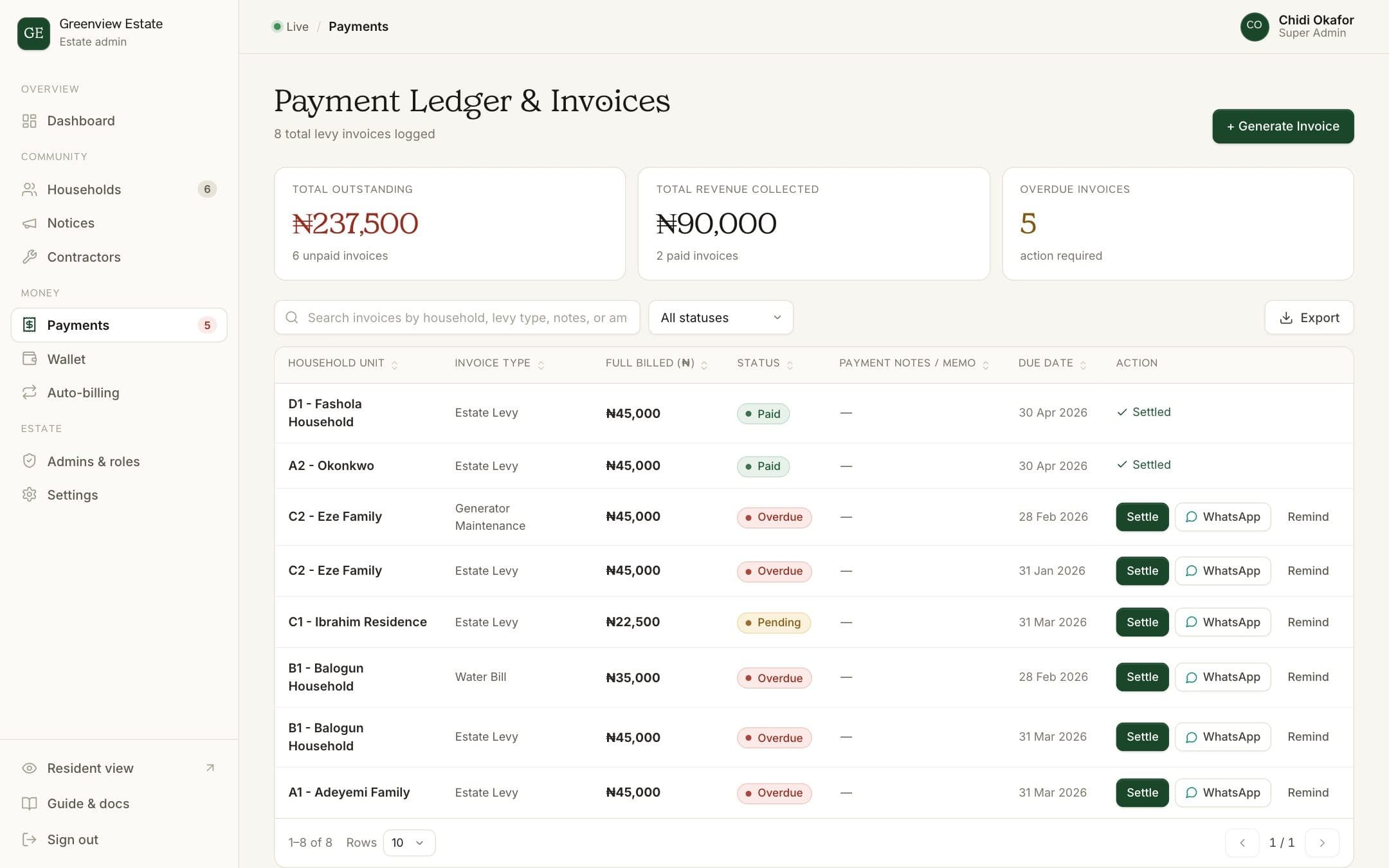
Make paying easier than not paying
- Offer a payment plan in writing: the arrears split over three or four months, alongside the current charge.
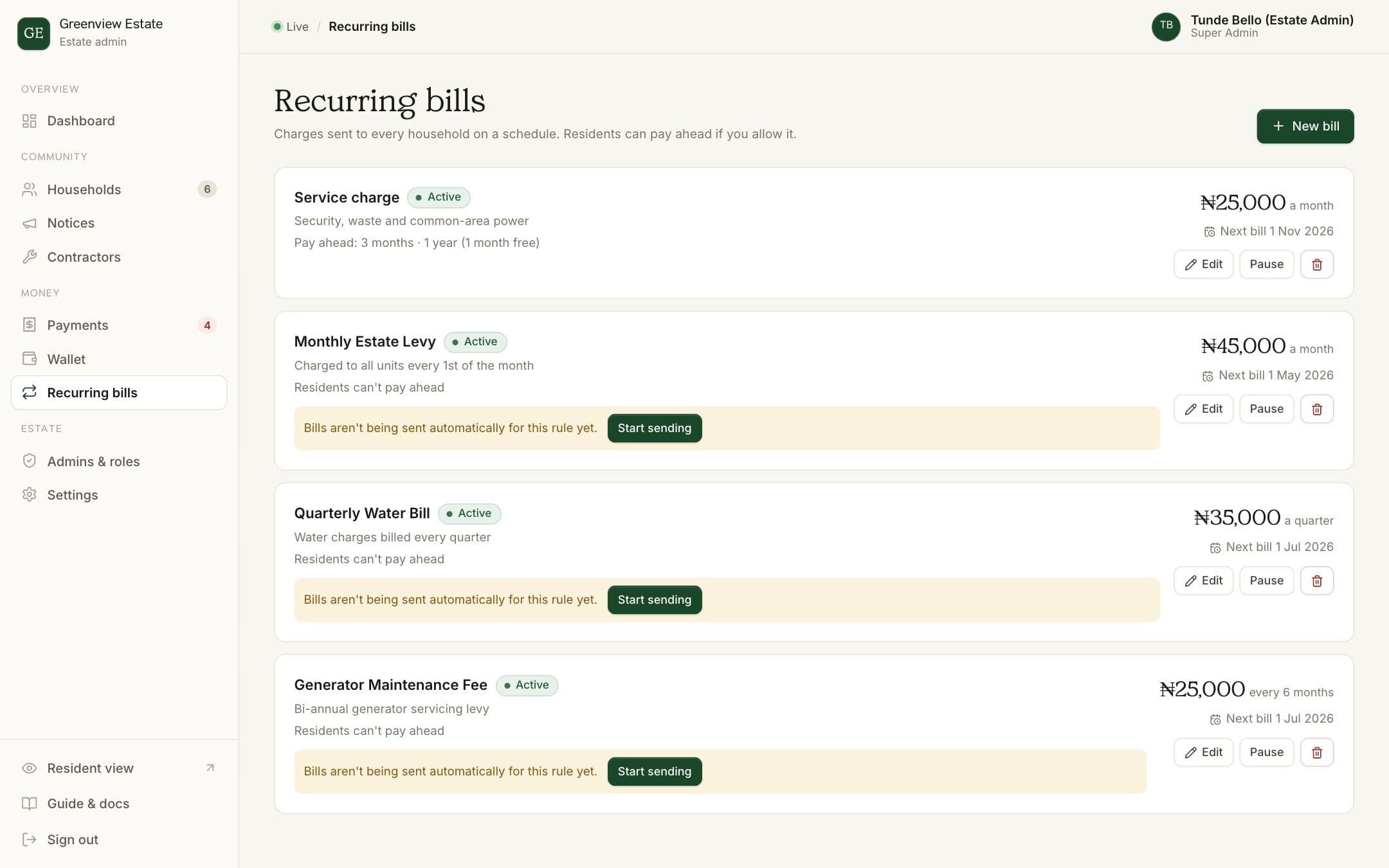
- Bill monthly or quarterly instead of once a year, so the amount is easier to find.
- Let residents pay ahead with a small discount, so the reliable payers are covered for the year.
- Show where the money goes. Residents who can see the security and power spending argue far less about paying for it.
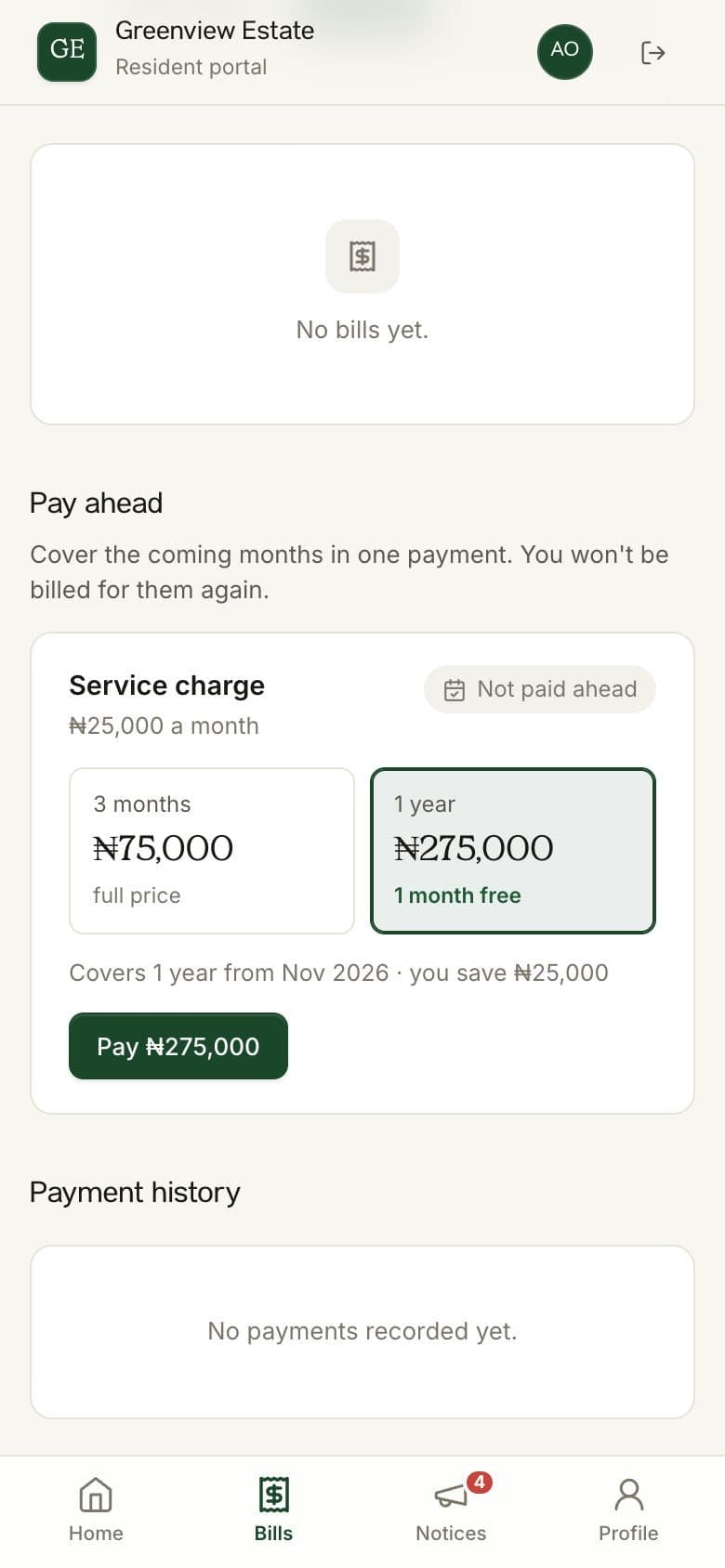
Tenants and landlords
Whoever the tenancy agreement makes responsible, the property owner is usually the one bound by the estate's deed of covenant or rules. If a tenant won't pay, write to the landlord as well. Keeping a directory of who owns each unit, not just who lives there, saves a lot of time here.
Use your estate's own rules
Your deed of covenant, estate constitution or association bye-laws set out what residents must pay and what happens if they don't. Common sanctions include late payment charges, loss of voting rights at the AGM, and losing access to optional services like estate facilities. If your rules don't cover arrears, propose a clear policy at the next AGM, so it's agreed by residents rather than imposed by the committee.
When nothing else works
- Mediation: a neutral third party, such as the Lagos Multi-Door Courthouse in Lagos, can settle disputes faster and more cheaply than court.
- Small claims: several states, including Lagos, have small claims courts for straightforward debts, designed to be used without a long, expensive case.
- A lawyer's letter: a demand from a lawyer, citing your estate's rules, often settles the matter on its own.
- Court: the last resort. Your records will matter, so keep every bill, reminder and reply.
Prevent the next round
Arrears are much easier to prevent than to collect. Recurring bills that go out on time, personal reminders, receipts that arrive immediately and accounts residents can see make the estate a place where paying is normal. BreeUp handles the billing, reminders, receipts and records, so the committee can spend its time on the few conversations that need a person.
How BreeUp helps
BreeUp keeps a clear who-owes list, sends receipts for every payment, and lets residents see where the money goes through the spending log. Seeing the spending is often what turns a reluctant payer around.
Reminders go privately, one household at a time, with copy-ready WhatsApp messages. Residents can pay in parts or months ahead, and admins can agree payment plans. With the visitor passes add-on, the estate can also let guards check whether a home is up to date. Guards see only "up to date" or "owes", and it's off unless the estate turns it on.
Read our guide to enforcement tactics and their legal risks, or set up your estate.