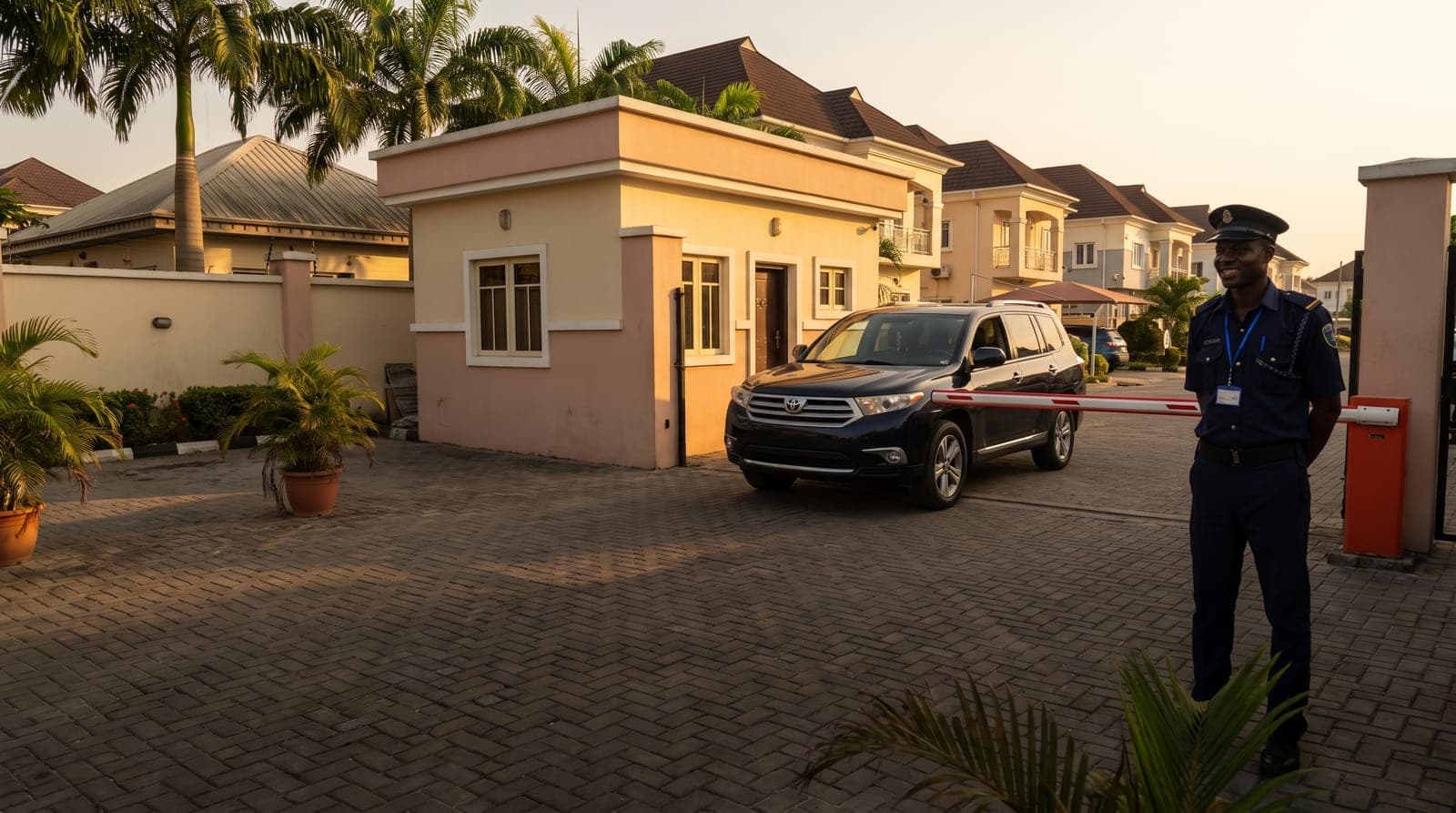
Electricity has become much more expensive for estates on Band A feeders: NERC's 2024 review took the Band A tariff to ₦225 per kWh before trimming it to ₦206.80 in May 2024, and tariffs are now reviewed regularly. In a typical 40-to-60-home estate, powering 15 to 25 streetlights throughout the night, plus the gatehouse booth and security lighting, can easily drain ₦150,000 to ₦250,000 every single month from the service charge account.
Faced with soaring dues and resident complaints, forward-thinking estate committees are systematically transitioning communal outdoor lighting to all-in-one solar LED systems. Here is the realistic cost-benefit breakdown, equipment specifications, and payback timeline for Nigerian estates.
The real running cost of grid-powered streetlights
Consider a medium estate running 20 conventional 100W halogen or sodium floodlights for 11 hours each night (7:00 PM to 6:00 AM). That amounts to 22 kWh of power consumption per night, or 660 kWh per month. At a Band A tariff of around ₦200 per kWh, that is roughly ₦132,000 to ₦160,000 a month just for streetlights, before maintenance, bulbs and photocells.
Solar streetlight procurement: What to buy
Avoid cheap unbranded market lights with lead-acid batteries that fail within three months of the rainy season. Estates should insist on the following technical standards:
- Battery Chemistry: LiFePO4 (Lithium Iron Phosphate) with a minimum 2,000-cycle lifespan (3 to 5 years of daily discharge).
- Wattage & Lumens: 60W to 90W All-In-One or Split-System units delivering 6,000 to 9,000 lumens per pole.
- Smart Dimming Profiles: 100% brightness from dusk until midnight, dimming to 30% after midnight with PIR motion detection that boosts to 100% when vehicles or pedestrians pass.
- Ingress Protection: IP65 or IP66 weatherproof rating to withstand heavy West African monsoon rain and high humidity.
The numbers: Installation cost vs. payback timeline
As a rough guide, a 60 to 80 watt integrated solar streetlight is often quoted at around ₦55,000 to ₦75,000 per unit, mounted on an existing pole. Prices move with the exchange rate, so get at least three quotes. For 20 poles, the total capital outlay is approximately ₦1.2M to ₦1.5M.
On these example figures, saving about ₦140,000 a month would pay back the outlay in roughly 9 to 11 months. From month 12 onward, communal street lighting is effectively free, permanently reducing the annual service charge burden for every resident.
How to fund the project without emergency levies
Never ambush residents with an unexpected emergency cash call. Instead, plan solar conversions through your estate Sinking / Reserve Fund. By dedicating 10% of annual service charge collections to capital improvements, the committee can convert 5 to 7 poles every quarter, completing the estate rollout smoothly without financial friction.