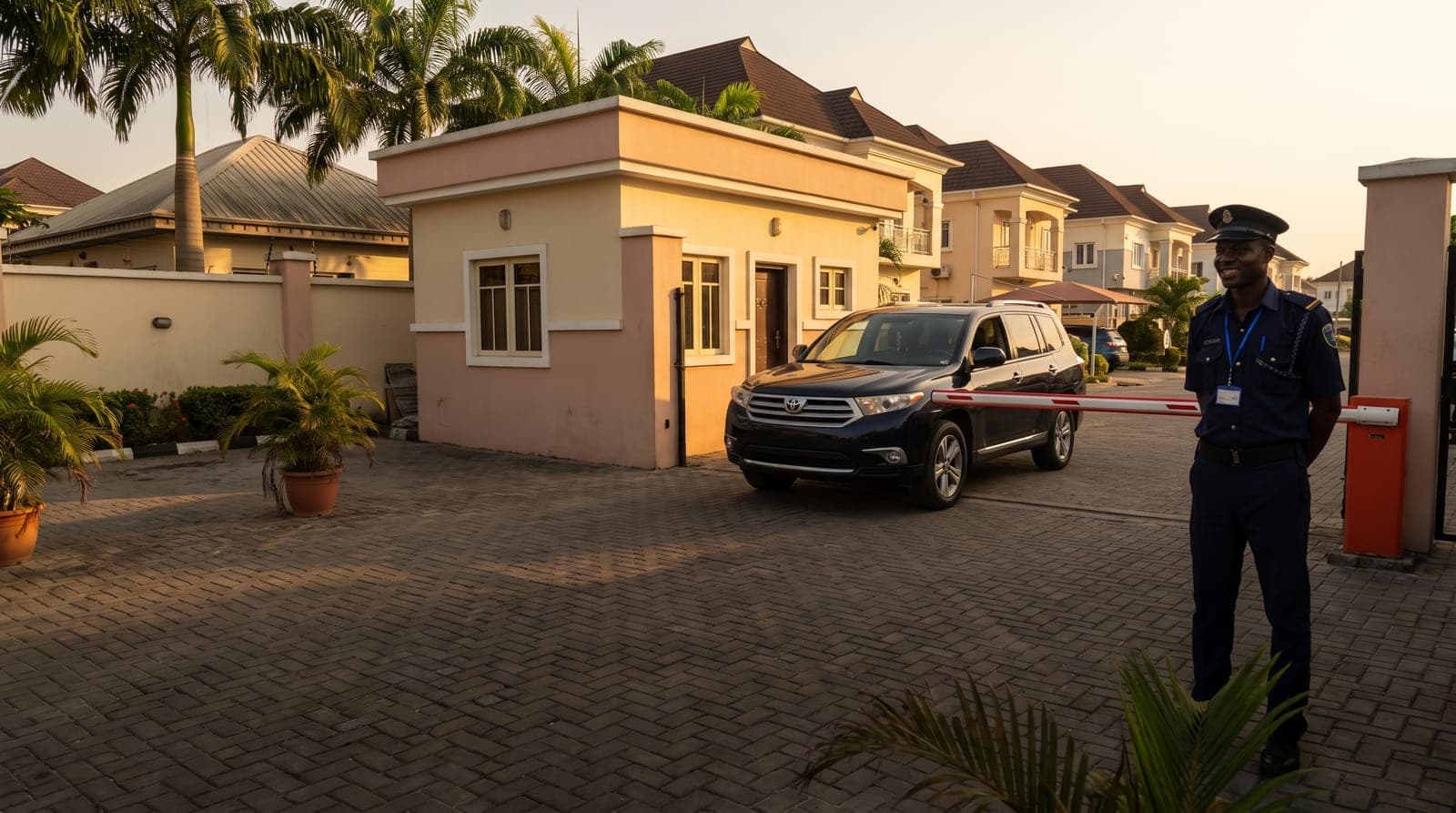
Across Lekki Phase 1, Ikoyi, Ikeja GRA, and upscale districts in Abuja, the surge in short-let apartments and Airbnb listings has triggered fierce battles at estate gates. Long-term resident families complain of midnight pool parties, loud music, speeding cars, and unknown guests wandering past neighbors' compounds. In response, some estate committees have tried blanket bans on short-lets, and owners have pushed back, arguing that owning a property includes the right to let it.
Banning short-lets outright rarely works and often alienates diaspora landlords who invested millions in property. The proven solution is smart regulation: establishing transparent host rules, gatehouse verification, and infrastructure levies that hold short-let operators accountable.
1. Mandatory host registration and local contact person
Every landlord or tenant intending to operate a short-let must formally register the unit with the estate EXCO. The registration must include:
- The legal property owner's verified contact information and deed/deed-of-sublease reference.
- The full name, phone number, and physical address of an on-the-ground property manager or host who is reachable 24/7.
- A signed commitment agreeing to estate bye-laws, maximum guest occupancy limits, and quiet hours.
- Agreement that any unpaid fines incurred by short-let guests will be debited directly against the unit's annual service charge ledger.
2. Eliminate open gatehouse entry with single-use digital passes
The greatest risk of short-lets is security compromise. In unmanaged estates, security guards are told 'different people will be entering flat 4B this week,' leading to an open-gate policy where guards stop checking IDs altogether.
Many estates now ask short-let hosts to send each arriving guest a visitor pass. The guest must show their pass code to the security guards at the barrier before access is granted. Open-ended or multi-day guest passes should never be issued.
3. Instituting a short-let sinking fund surcharge
Short-let units place significantly higher wear and tear on communal infrastructure than standard long-term tenancies. A two-bedroom flat rented to short-let guests generates three to four times the vehicular traffic, garbage volume, and gate security attention of an owner-occupier.
Some estates add a short-let surcharge to the service charge. If you do, agree the amount at a general meeting and write it into the by-laws. This extra revenue is earmarked directly for the estate sinking fund to maintain access barriers, drainage, and street lighting.
4. Clear quiet hours and graduated penalty fines
Estate bye-laws must specify strict quiet hours (e.g., 10:00 PM to 7:00 AM on weekdays; 11:00 PM to 8:00 AM on weekends). Violations should follow a transparent, escalating scale:
- First noise violation: Written warning sent immediately via WhatsApp to the registered host, with security dispatching guards to shut down excessive noise.
- Second violation: a fine set in the by-laws, for example ₦50,000, billed to the host, and no new guest passes for 7 days.
- Third violation: a larger fine, and short-let use suspended until the committee has heard the case.