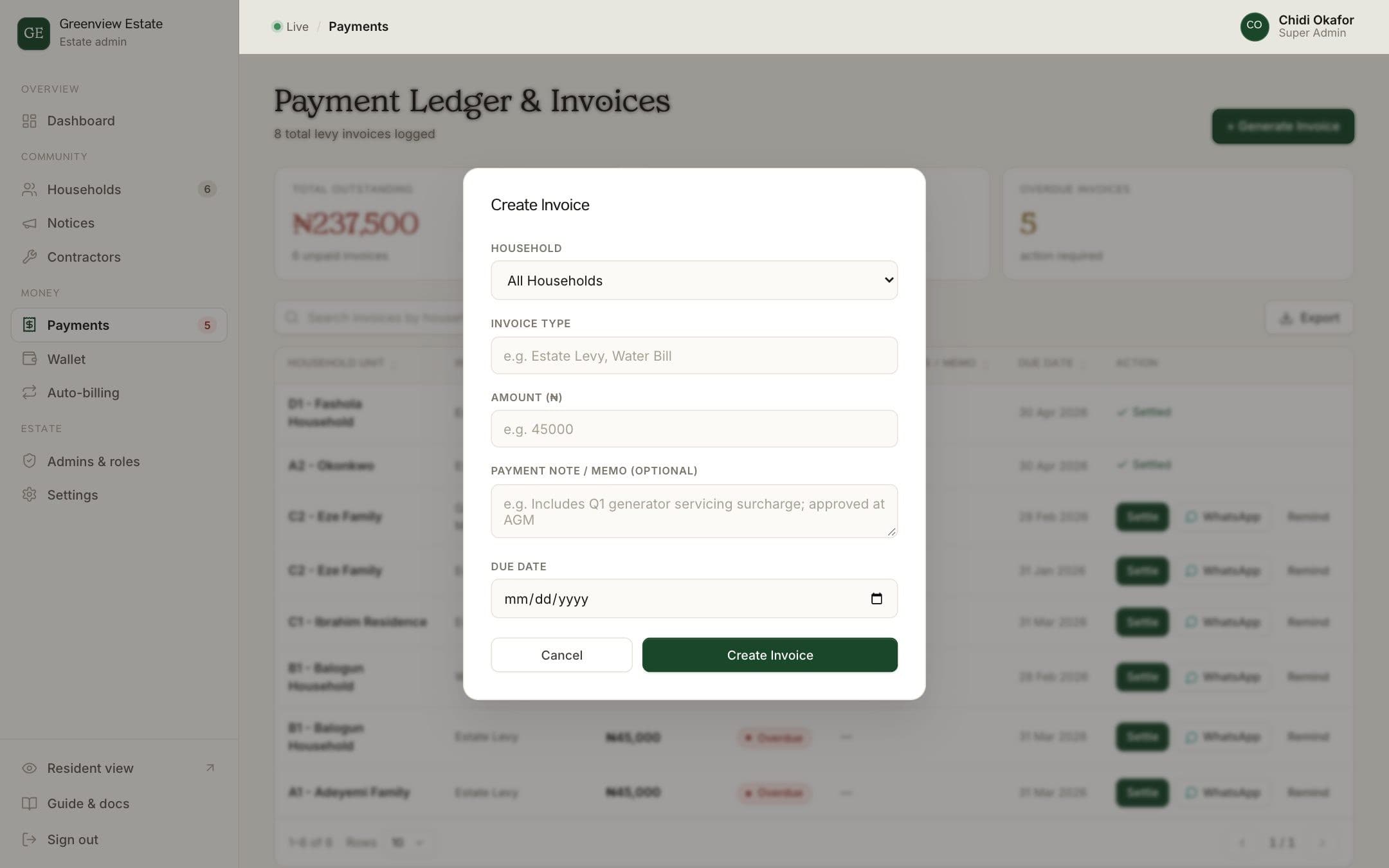
Chasing unpaid service charge goes better in steps: a friendly reminder, a firmer follow-up, then a formal letter. Below are templates for each. Copy them, replace the parts in square brackets, and send them privately to each household, never in the residents' group.
Before you send anything
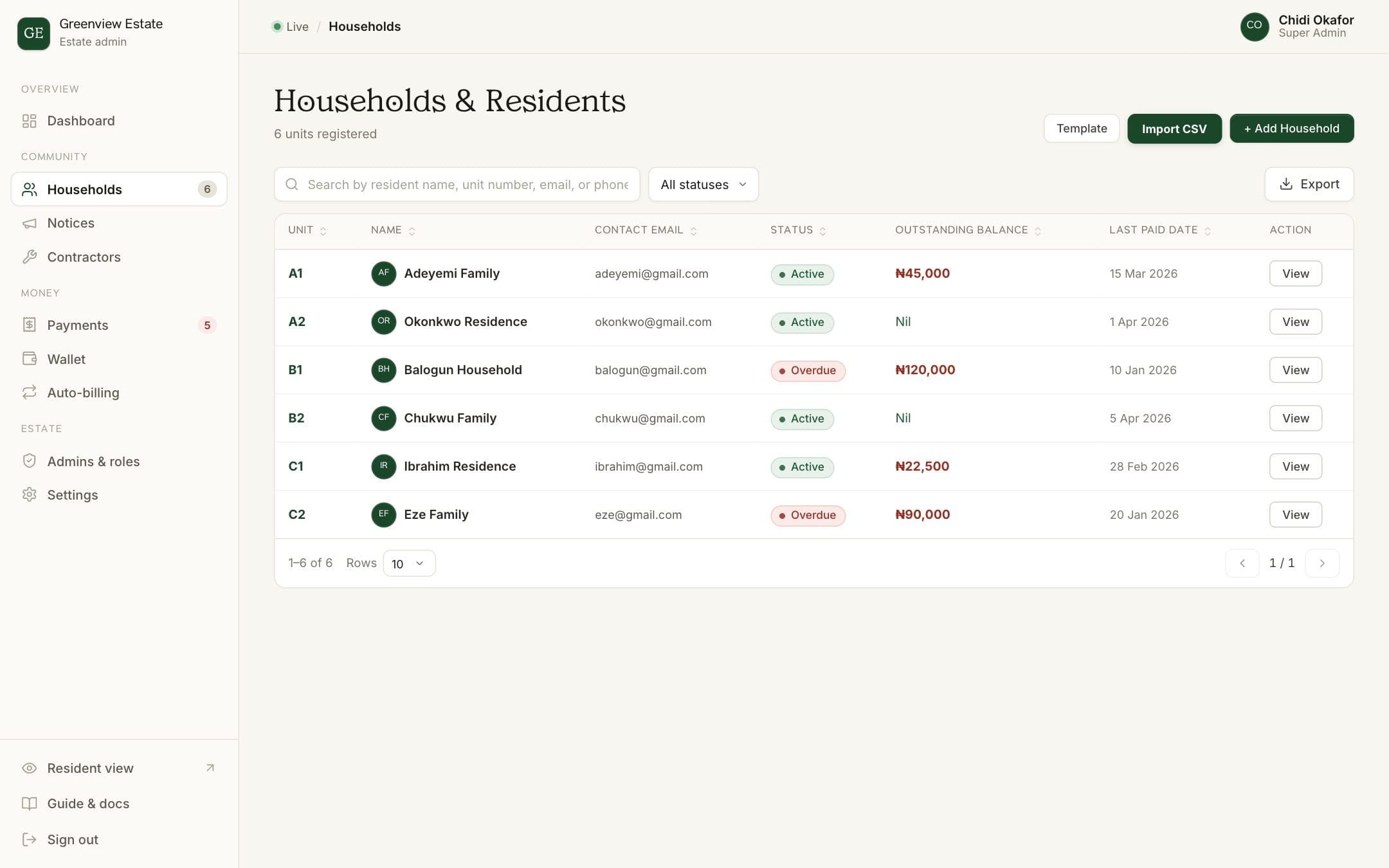
- Check the household hasn't already paid. Look for transfers that arrived without a reference.
- Confirm who is responsible: the resident, or the landlord under the estate's rules.
- Have the exact amount, the period it covers and the estate's account details to hand.
1. Friendly reminder (a few days after the due date)
2. Firmer follow-up (about two weeks later)
3. Formal demand letter
Print this on the estate's letterhead, have two executives sign it, and deliver it by hand or email with a copy kept on file. If the household is a tenant, send a copy to the landlord too.
[Estate or association name] [Address] [Date] To: [Name of resident or property owner] [Unit and address] Re: Outstanding service charge for [unit] Dear [Name], Our records show that the sum of ₦[total amount] remains unpaid for [unit], made up as follows: [Period 1]: ₦[amount] [Period 2]: ₦[amount] This charge is payable under [clause or section] of the [deed of covenant / estate constitution / bye-laws], which [resident or owner] is bound by. Reminders were sent on [date] and [date]. We ask that you pay the full amount by [date, usually 14 days from the letter] into: Account name: [estate account name] Bank: [bank] Account number: [account number] Reference: [unit reference] If you're unable to pay in full, please contact us before that date to agree a written payment plan. If the amount is not paid or a plan agreed by [date], the [association / committee] will [state the next step allowed by your rules, for example apply the late payment charge approved at the [year] AGM, or refer the matter to our lawyers]. If you believe this amount is wrong, please send us your payment records and we will review them promptly. Yours faithfully, [Name], [Chairman] [Name], [Treasurer] For and on behalf of [estate or association name]
Tips for sending it
- Only threaten what your rules allow and you're prepared to do. An empty threat weakens every letter after it.
- Don't threaten to lock people out or cut off utilities. That can expose the estate to legal claims, even when the debt is real.
- Keep a copy of every reminder and letter, with the date it was sent. If the matter ever goes further, your records are your case.
- Always offer a way to talk. Many households pay once someone agrees a plan with them.
Or let reminders go out on their own
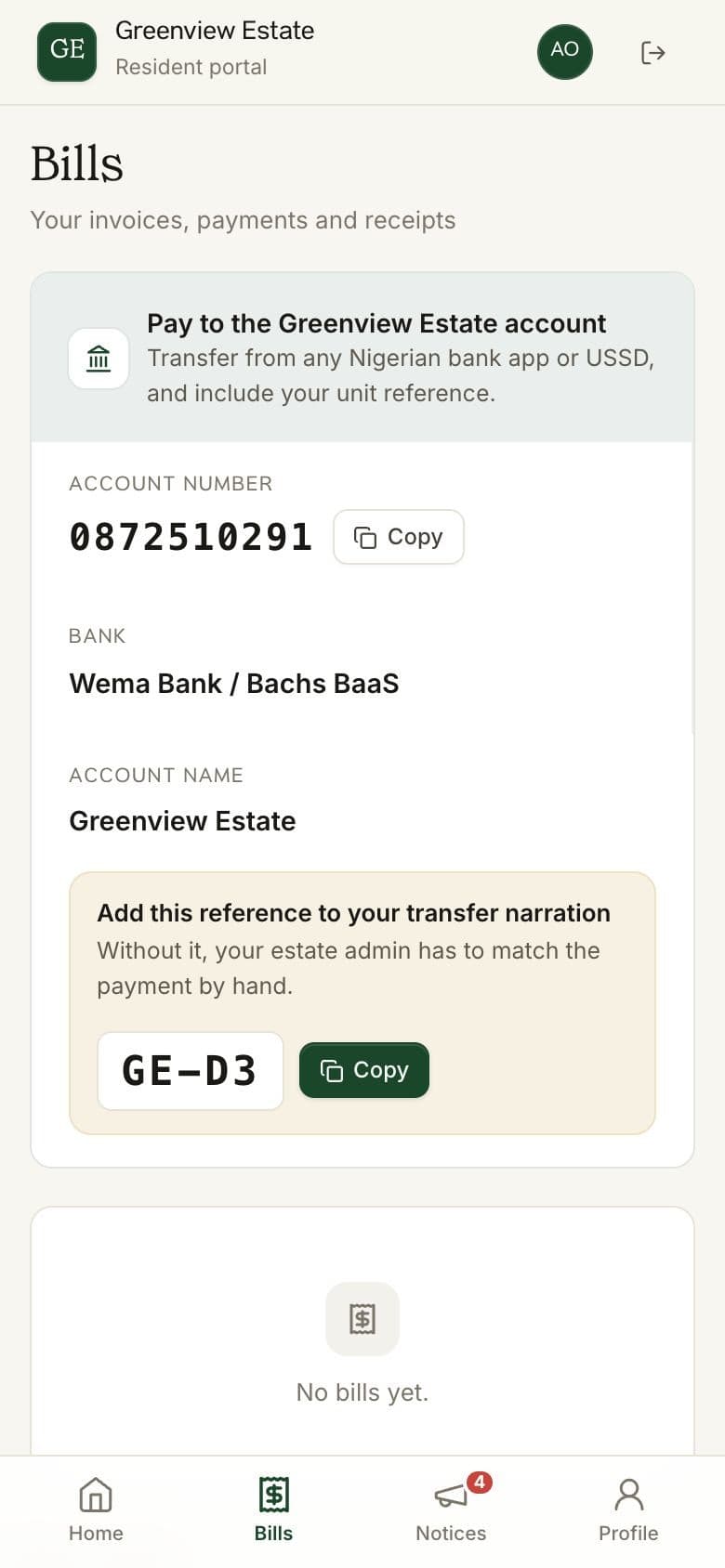
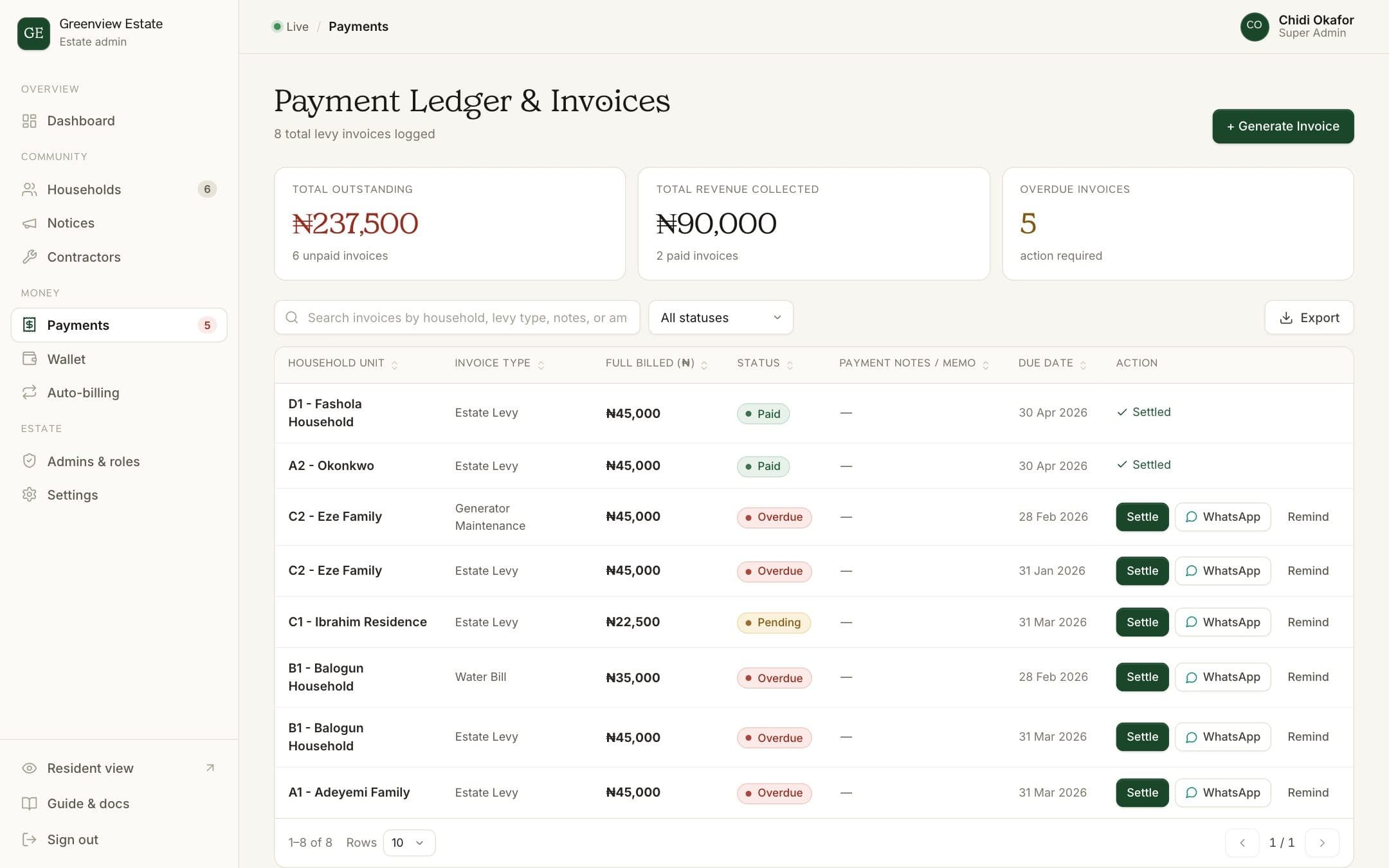
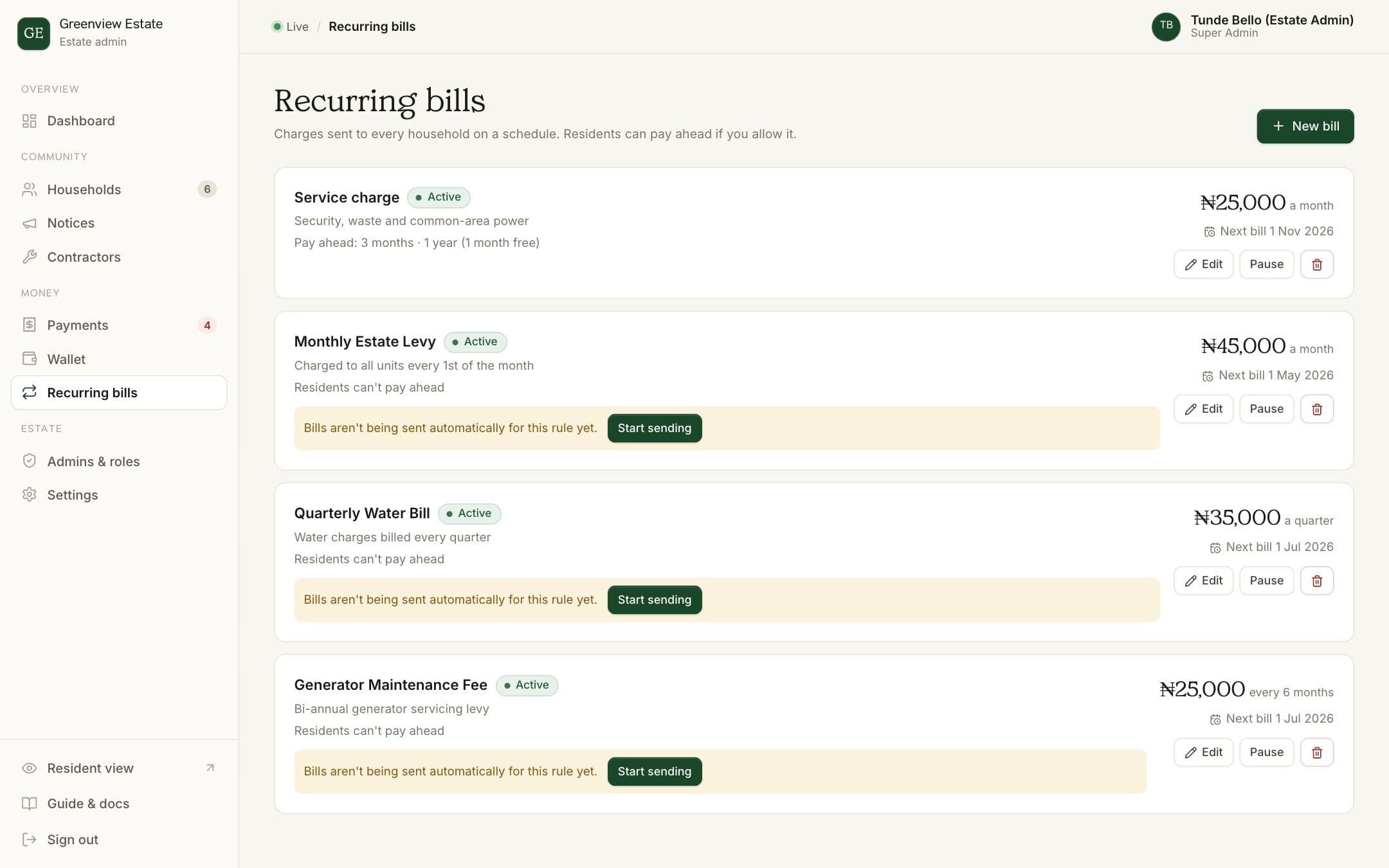
In BreeUp, every unpaid bill has a WhatsApp button that opens a ready-written reminder for that household, with the amount and what it's for. Recurring bills go out on schedule, receipts are issued as soon as a payment is recorded, and every household's balance is in one list, so you only need the formal letter for the few who still don't pay.
How BreeUp helps
Before you send a demand letter, BreeUp gives you the facts it needs: every bill, payment and balance for the household, and their statement.
Most households pay after a polite private reminder, so start with the copy-ready WhatsApp reminders and keep the formal letter for the few who don't.
Set up your estate, or put dues into your rules with the estate by-laws template.