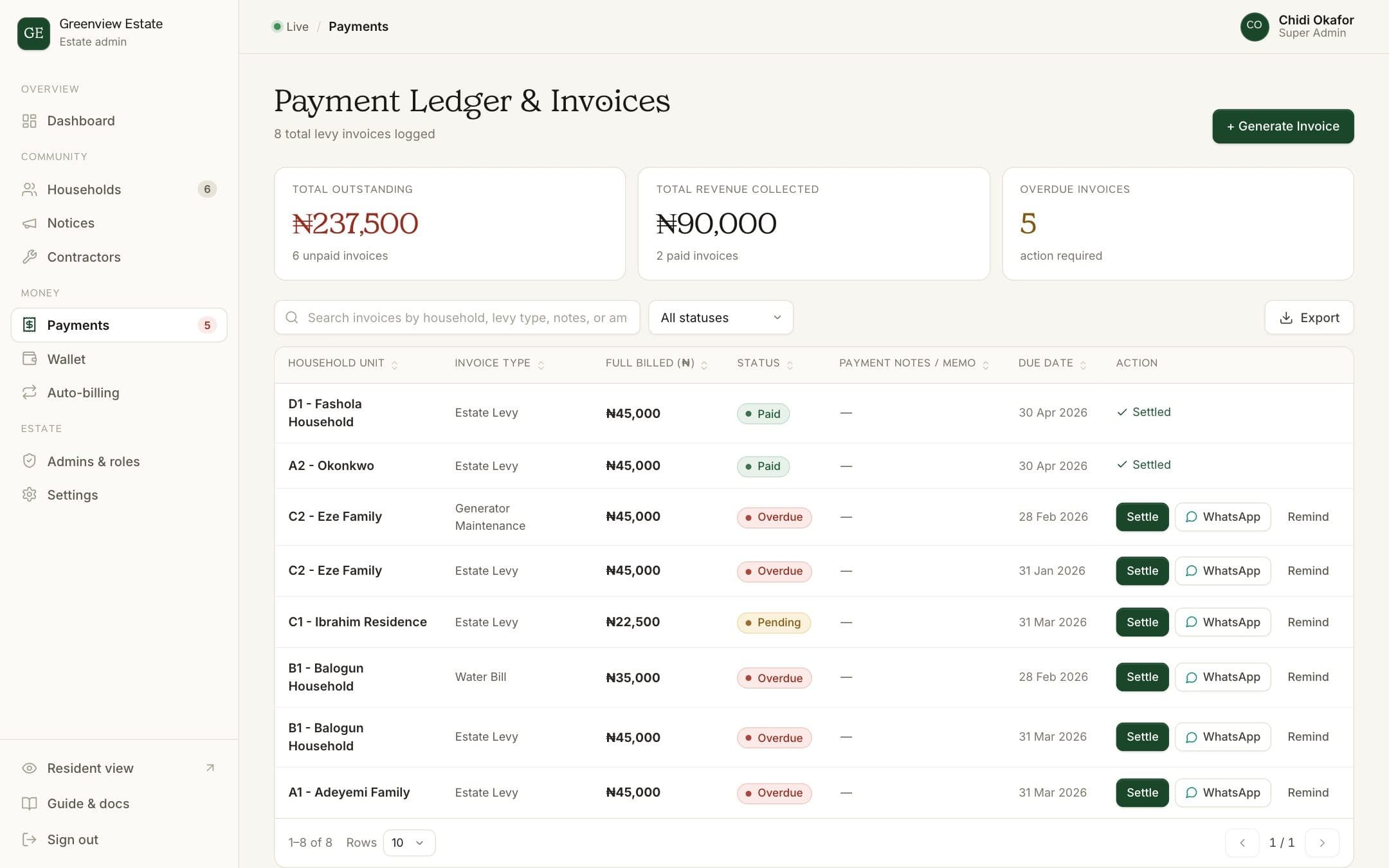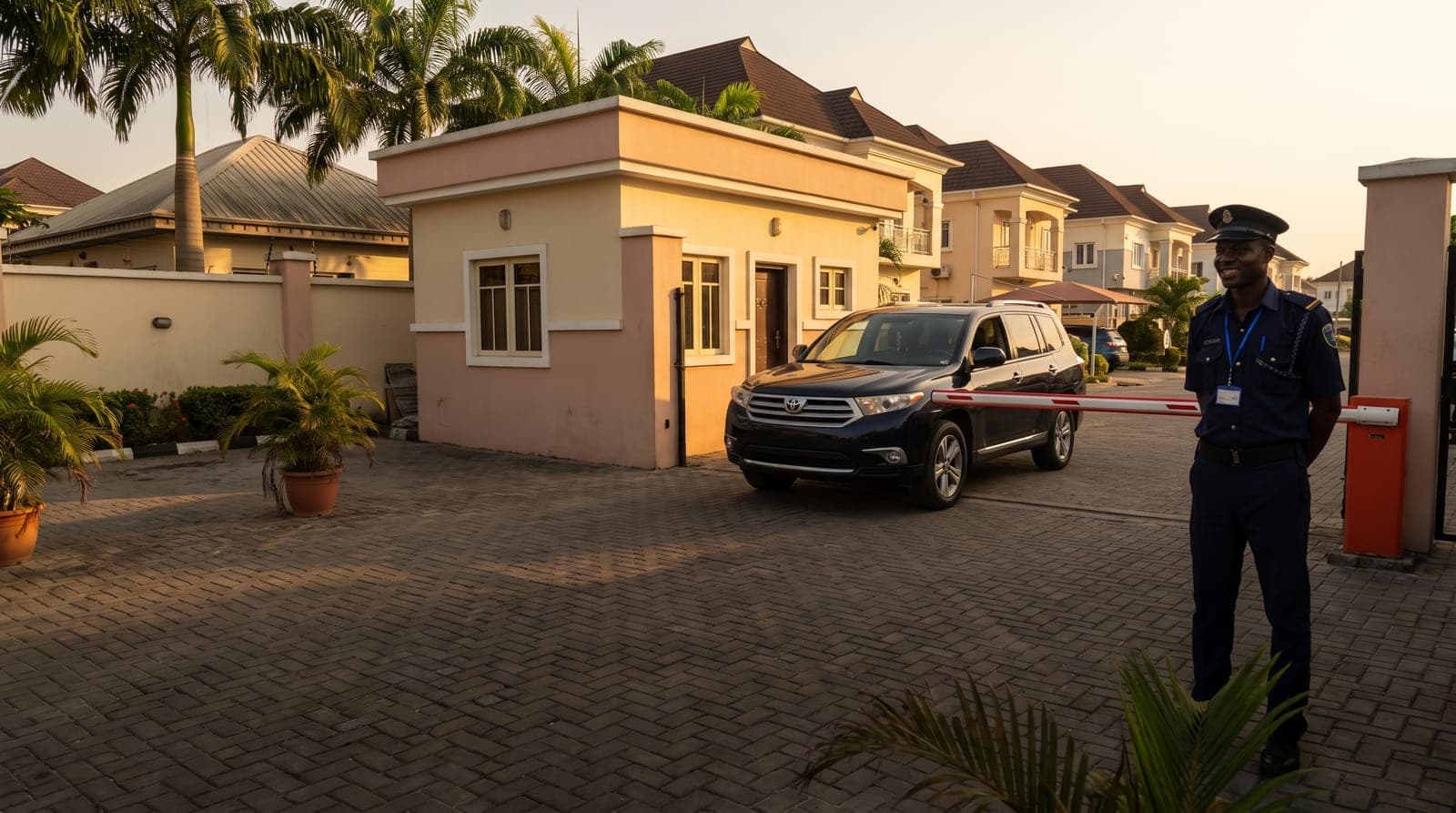
The AGM is the one meeting every resident cares about, and the one most committees dread. Not because the news is bad, but because pulling together a year of bank statements, receipts and WhatsApp approvals into something presentable takes weeks. By the time the report is ready, everyone's too tired to talk about the future.
What residents want to see
- How much service charge was collected and how much is still owing.
- What the estate spent, broken down by category: security, power, cleaning, repairs, admin.
- Who the contractors are and what each one was paid.
- What's in the account now.
- A plan and budget for the coming year.
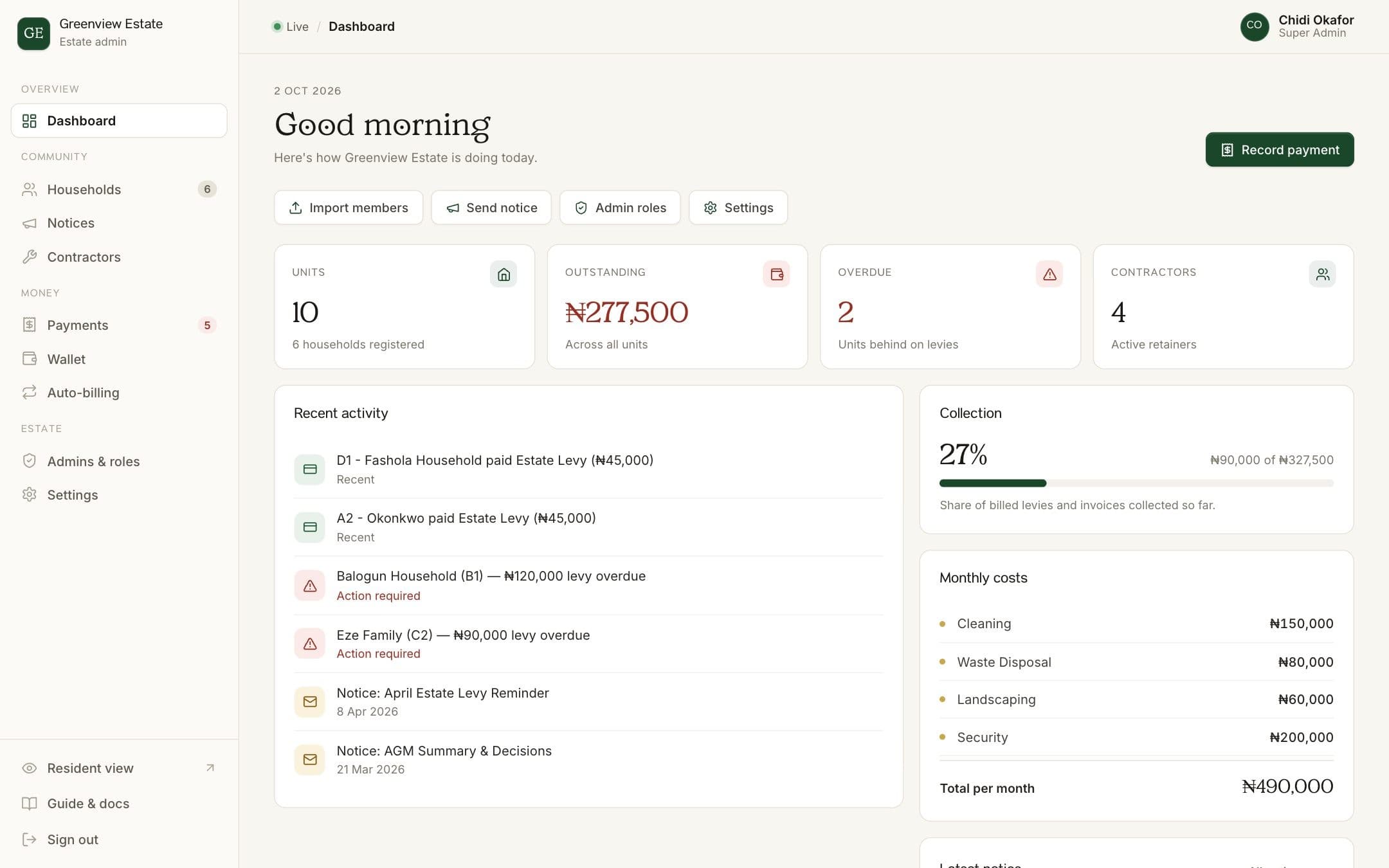
Start at the beginning of the year, not the end
The AGM report is easy if you've been recording as you go. Tag each payout by category when it happens, not from memory in March. Reconcile payments monthly, not annually. Keep approvals attached to the payouts they belong to. Then the year-end report is a summary of records you already have.
The report itself
- Income summary
Total service charge billed, total collected, total outstanding. Show the collection rate as a percentage so it's easy to compare year on year.
- Arrears list
Which households still owe and how much. Present totals, not names, to the general meeting; the detailed list is for the committee.
- Spending by category
Security, power and diesel, cleaning, repairs and maintenance, water, waste, admin and professional fees. Show this year alongside last year so trends are visible.
- Contractor summary
Each vendor, what they did, what they were paid and the contract term. This answers the most common AGM question before it's asked.
- Bank balance
Opening balance, total in, total out, closing balance. Match it to the bank statement.
- Next year's budget
What the committee proposes to spend, what it means for the service charge, and any capital projects.
On the day
- Share the report in advance, at least a week before the meeting, so residents come with questions, not surprises.
- Keep the presentation short. The report is for reading; the meeting is for decisions.
- Record resolutions properly: what was agreed, the vote count, and who proposed and seconded.
- Make the report available after the meeting to residents who couldn't attend.