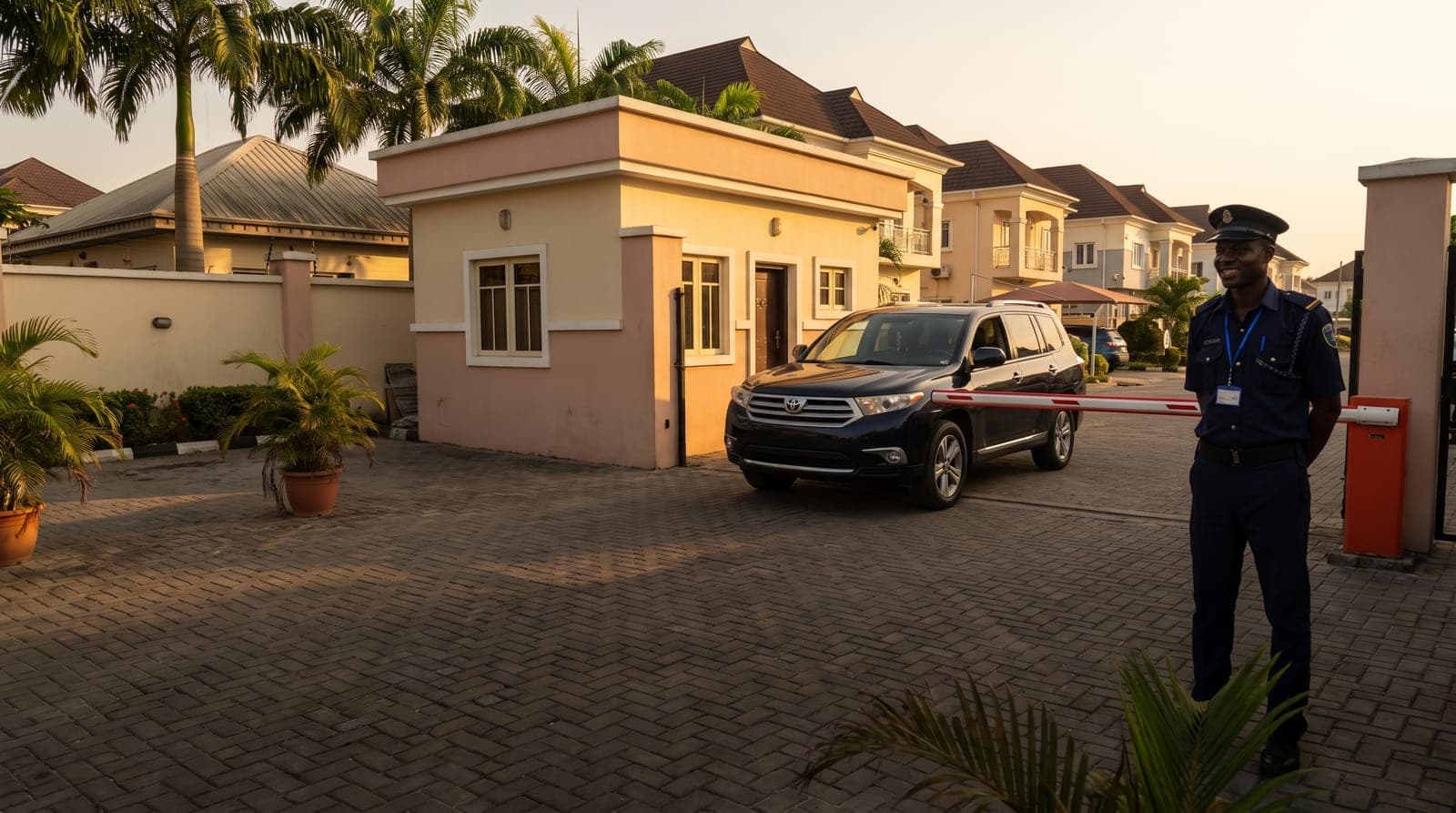
The explosive growth of short-let rentals and Airbnb apartments across Nigerian urban centers has generated handsome returns for property owners and diaspora investors. From Lekki Phase 1 and Ikoyi to Maitama in Abuja and Old GRA in Port Harcourt, landlords can earn double or triple the yield of traditional yearly leases by catering to business travelers, tourists, and holidaymakers.
However, for estate executive committees and long-term resident families, short-let properties often represent a relentless operational headache. A single unmanaged short-let apartment can disrupt an entire street, creating serious security vulnerabilities, electrical grid overloads, noise disputes, and administrative burnout for volunteer committee members.
1. The Security Dilemma: High-Frequency Turnover
In a traditional long-term tenancy, an estate security team gets to know the family, their domestic staff, and their regular vehicles within a few weeks. Perimeter security operates with familiar faces.
In contrast, a busy two-bedroom short-let apartment welcomes new, unknown occupants every two to three days. Over a single year, that single flat introduces hundreds of completely unvetted strangers into the heart of a secure residential neighborhood. When security guards are simply told 'different guests will be coming this weekend,' gatehouse vigilance breaks down, creating an open-gate vulnerability that compromises every neighboring home.
2. Electrical and Transformer Strain
Unlike long-term tenants who pay their own electricity bills directly and turn off appliances when leaving the house, short-stay guests have zero incentive to conserve power. Guests routinely leave five air conditioning units running at 16°C around the clock, even when spending the day outside.
In estates operating shared communal transformers or central diesel generators, this unmetered consumption creates severe phase imbalances on the communal step-down transformer. During peak heat seasons, short-let heavy closes experience blown transformer fuses and accelerated equipment failure, throwing paying family compounds into darkness.
3. Noise Pollution and Neighborhood Friction
The most volatile source of community conflict is the party short-let. When short-stay guests host midnight birthday celebrations, club afterparties, or loud music events with dozens of unregistered external visitors, peaceful family neighborhoods become unbearable. Long-term homeowners who invested tens of millions of Naira in their homes rightly feel aggrieved, leading to shouting matches on estate WhatsApp groups and calls to local police divisions.
How Forward-Thinking Estates Manage Short-Lets Successfully
Total bans on short-lets are hard to enforce and invite legal challenge, as owners argue that ownership includes the right to let. The proven solution is structured, digital regulation:
- Mandatory Host Registration & Local Agent SLA: Every property owner operating a short-let must register the property with the estate EXCO, providing a designated local property manager who is reachable 24/7 and contractually bound to respond to complaints within 15 minutes.
- Short-Let Surcharge: some estates bill short-let units an extra charge, agreed at a general meeting, to cover the extra wear on the gate, security overtime and transformer use.
- Individual Digital Pass Verification: Hosts create a visitor pass on BreeUp for each arriving guest, valid for their stay (up to a week at a time). Unregistered guests are not cleared at the gate.
- Escalating Fines Against the Host: rather than arguing with guests at 2:00 AM, noise and parking breaches lead to fines set in the by-laws, billed to the host's household.
Fair Guard Pay for High-Turnover Gates
Gatehouse personnel in estates with heavy short-let traffic handle significantly more interactions, vehicle inspections, and phone calls. Estate committees should pay guards at least the national minimum wage, ₦70,000 a month since July 2024. Fairly compensated guards maintain professional patience, inspect guest passes accurately, and refuse informal bribes from unregistered visitors.