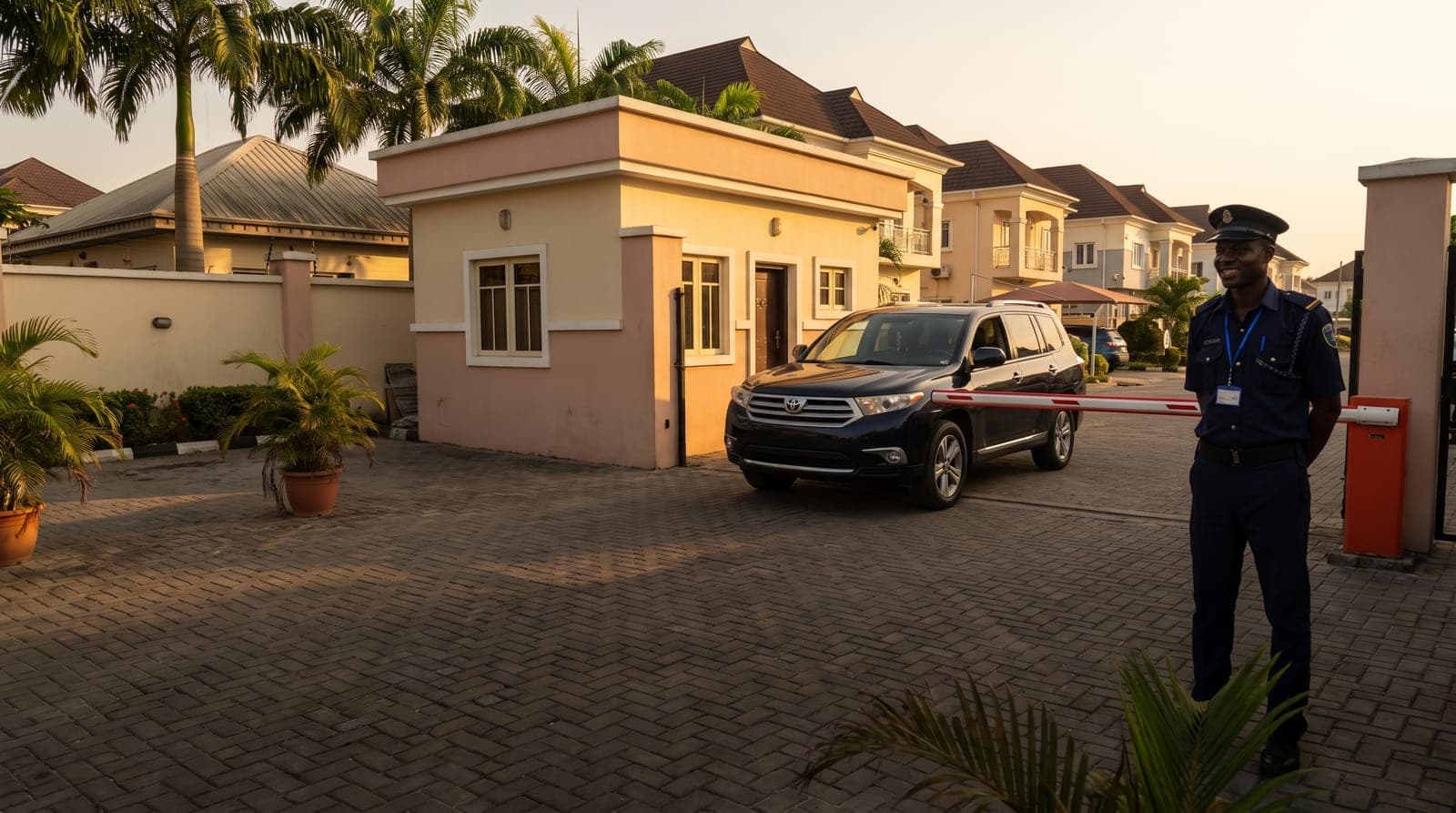
In most gated communities in Nigeria, security is the biggest line in the budget. Yet complaints about guards are nearly universal: sleeping on duty during late night shifts, letting unknown commercial vehicles enter without passes, or disappearing on unauthorized breaks.
The root cause is rarely the individual guard, it is flawed contracting, unrealistic wage expectations, and absent operational oversight by the estate committee. Here is how professional estate committees hire, vet, and hold security teams accountable.
1. Licensed security company vs. direct neighborhood hire
While hiring unvetted local guards directly may look cheaper on paper, it exposes the estate and its trustees to severe legal liabilities. If an unregistered guard is injured on duty or involved in a theft, the estate trustees can be held personally liable.
- Hire a private guard company licensed by the Nigeria Security and Civil Defence Corps (NSCDC), which regulates the industry under the Private Guard Companies Act. Ask to see the licence.
- Require proof of current NSCDC operating license and corporate registration with CAC before signing contracts.
- Ensure the security firm carries Third-Party Fidelity Guarantee Insurance to cover resident losses in the event of guard complicity in theft.
2. The wage trap: What are guards actually being paid?
A common mistake is negotiating the fee per guard post so low that, after the company's costs, the guard takes home less than the minimum wage. The company's overheads and uniforms come out of that fee first. A guard earning below subsistence wage cannot remain alert for 12 hours every night.
Insist on transparency in your Service Level Agreement (SLA). Ask what each guard is actually paid, and make sure the contract says you pay guards at least the national minimum wage, ₦70,000 a month since July 2024. Happy, adequately paid guards take pride in protecting the community and resist bribes at the gate.
3. Enforcing 12-hour maximum shift rotations
Never permit guards to work 24-hour back-to-back shifts. Exhaustion is the primary reason guards fall asleep inside the gatehouse between 2:00 AM and 5:00 AM.
- Day Shift: 6:00 AM to 6:00 PM (focused on visitor logging, delivery couriers, and contractor traffic).
- Night Shift: 6:00 PM to 6:00 AM (focused on perimeter security, gate locking, and emergency patrol).
- Rotate guards between day and night shifts regularly, so nobody is on nights for months on end.
- Include a mandatory clause in your contract that any guard found asleep on duty incurs an immediate contractual penalty deductible from the firm's monthly invoice.
4. Replace manual paper logbooks with digital access logging
Paper gate books are unreadable, frequently stolen, and useless during police investigations. When every visitor must give a six-digit code sent on WhatsApp, guards are empowered to act professionally without awkward arguments with residents or guests.